
The Iran war is really an "information war"
And we have been on the losing side far longer than anyone realizes

During the first two weeks of Operation Epic Fury, the U.S.-Israel military campaign against Iran launched on February 28, 2026, security analyst Ryan Mauro noticed something odd about the views Americans were supposedly expressing on social media.
Analyzing 1,000 viral English-language posts on X concerning the Iran conflict. Mauro discovered that 559, or more than half, originated from accounts outside the United States. Among the top 100 most viral posts, 40 came from foreign accounts.
Those posts collectively attracted over 650 million views and nearly 22 million interactions. Interestingly, Mauro deduced that barely 10 percent of the foreign-origin viral content conveyed any positive view of the operation whatsoever, whereas 64 percent was patently hostile.
A parallel analysis by the Argyle Consulting Group of the 100 most viral posts throughout the early stages of the campaign determined that 60 percent of viral ‘Iran’ content originated from social media users outside the country, while appearing, in language, tone, and political framing to be American.
Similarly, researchers from the Media Forensics Hub at Clemson University in South Carolina identified accounts that in the runup to the conflict posed as those of Scottish separatists, but were actually commandeered by the Iran Revolutionary Guards Corps (IRCG).
According to an article in Euronews, “the accounts spent months across X, Instagram and Bluesky cultivating followers and building up online credibility, before they started to spread pro-Iranian propaganda following the onset of the US and Israel’s war on Iran in late February”.
Although it is obvious Americans as a whole have not been supportive of the Iran War, one needs to ask if something not so self-evident might be afoot.
“What we’re seeing is discourse that looks American — written in English, using U.S. political language — but is actually coming from outside the country,’ said Argyle CEO Eran Vasker. “Almost impossible for a regular user to detect.’
Every single foreign-based post in the Argyle dataset was negative toward Epic Fury. Every supportive post came from actual Americans.
Posts containing the word “Iran” generated an estimated 1.5 trillion potential clicks in the first week alone. Within that setting the majority of the viral content was foreign-sourced, coordinated, inimical to the United States on the main, and functionally indistinguishable from the authentic voice of American citizens.
As Mauro wrote in an op-ed in The Jerusalem Post, “we are catastrophically losing the information war raging across social media.”
To understand what Mauro means by “information war”, it helps to understand the precise military strategy it references.
Information warfare — sometimes known as “political warfare” or “cognitive warfare”— is not principally about modifying what the public believes at the present moment.
It expands on to a much longer historical arc and through subtler mechanisms than simple propaganda. Its core principles, refined over a century of practice from Soviet dezinformatsiya through contemporary Russian and Iranian intelligence practices or “”active measures”, can be stated quite elegantly.
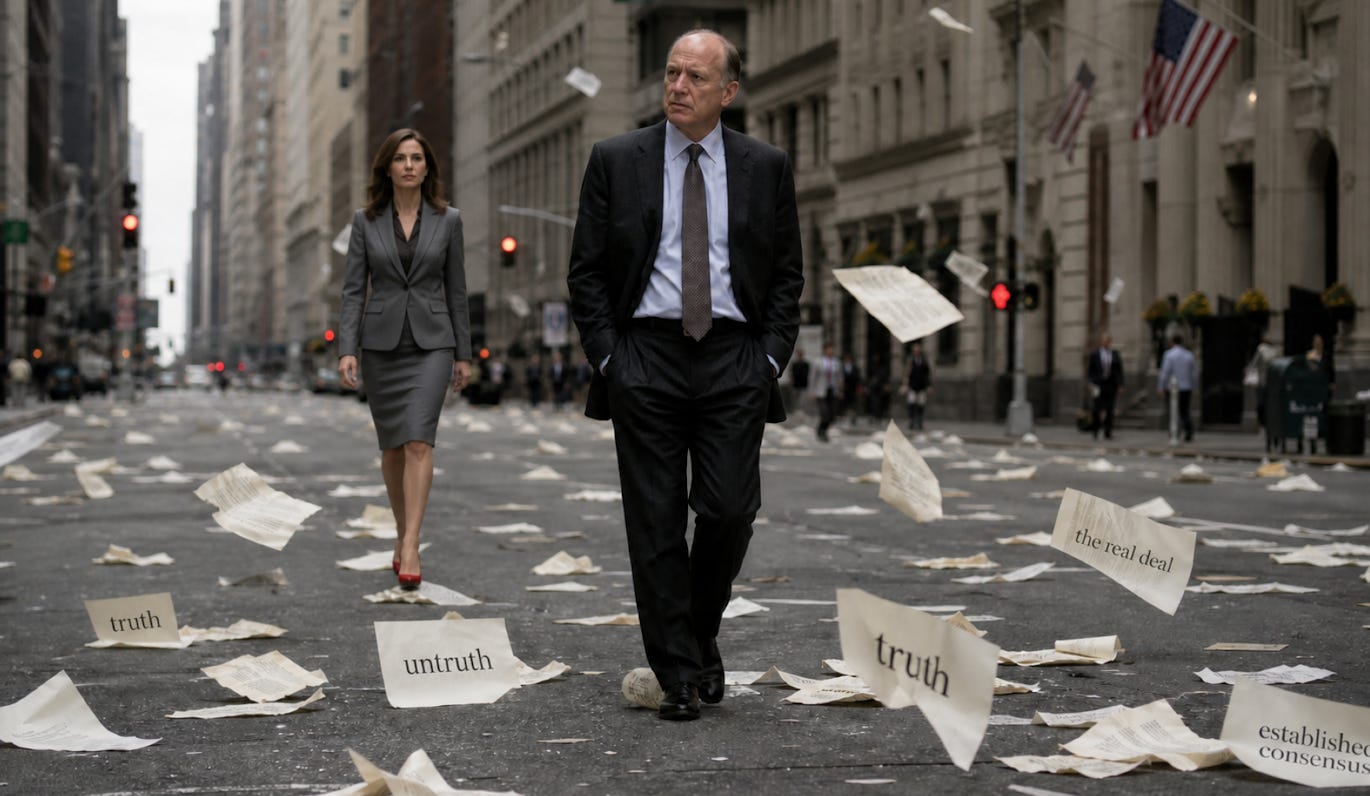
You do not need to convince your mark of anything. You simply need to confound them, demoralize them, and sabotage their ability to form and sustain coherent collective judgments.
The classic formulation, attributed to Soviet doctrine, is that the goal of information warfare is to make the target population uncertain about what is true, who is trustworthy, and whether their own institutions are even reliable.
A public that cannot confidently distinguish genuine domestic dissent from manufactured opposition is one whose collective decision-making capacity has been severely compromised.
In their study of social media weaponization P.W. Singer and Emerson Brooking underscore how the endgame of information warfare is to make sure that the lie circulates faster than the truth, and that correcting or refuting untruth summons more far more effort than believing it.
Information warfare targets three distinct audiences concurrently, and it targets each one in a different and unique manner. It zeroes in on the public at large to provoke general bewilderment, or what we might dub “epistemic mayhem”.
In the present context the aim is not to induce the populace to support Iran but to make them doubt their own government, distrust media reporting, and curate the false conviction that “everyone” is against what their leaders are saying and doing.
Elite opinion, along with the conventional wisdom of journalists, congressional staffers, think tank analysts, and academics, is singled out for “narrative seeding” — the practice of injecting the preferred framework into the evidentiary discourse that impacts how the conflict is characterized and dissected.
Policymakers themselves become oblique targets through the cumulative pressure of a fabricated consensus their advisors and media monitors report back to them. Each layer of the operation feeds the next one, as the Kettering Institute showed in its investigation of Russian active measures during the 2024 U.S. Presidential campaign.
The effects of such operations on institutional thinking are more substantial and long-lasting than their impact on raw public opinion polls.
A study by the Princeton Empirical Studies of Conflict Project’s concerning foreign influence in the spread of disinformation found that most online initiatives do not appreciably shift public opinion in the short term.
This finding would seem to be reassuring, but it is highly misleading. Public opinion polls measure what people say strictly in response to direct queries.
Institutional thinking. — the analytical context within which journalists examine the purport of any given news item, the elementary assumptions that think tank personnel bring to a policy debate, the background assumptions that congressional staffers treat as common sense in drafting legislation — is shaped by the information environment over months and years, not by what a pollster asks at any particular moment.
Information warfare is most potent whenever it can stealthily revise the very plausibility structure within which the give-and-take of opinion sampling itself takes place.
The two “metanarratives” Mauro discerned as somehow saturating the Epic Fury information environment illustrate this special means of manipulating opinion.
The all-too-familiar antisemitic trope of a “Zionist conspiracy” was not intended to recast the views of the broader electorate toward the war. It was aimed at sowing skepticism about the competence of America’s key policy-makers in electing to strike Iran and to impugn their motives as somehow illegitimate, warped, and unrepresentative of bona fide American interests.
Such “wag the dog” type of messaging was designed to intimidate the media and Congress into going along with a popular social meme that styled Epic Fury as a cynical domestic political gambit propelled by AIPAC money rather than a well-reasoned, independent strategic choice.
Iranian state media itself disclosed that the IRCG was heavily committed to these sorts of tactics against “foreign enemies” fifteen years ago.
Speaking to worshippers before prayers during a Friday mosque service on July 18, 2011, Iranian intelligence minister Heidar Moslehi bragged that “a large investment has been made in the Intelligence Ministry to direct [our strategy] from a defensive to an aggressive stance.”
He added: “We do not have a physical war with the enemy, but we are engaged in heavy information warfare with the enemy.”
What the research of Mauro and others documents in telescopic format, therefore, is the activation of an information warfare apparatus built over years — one which was deployed in full operational mode during Epic Fury to counter American supremacy in kinetic warfare.
The results are still outstanding.
To understand completely IRCG information warfare methodology one must do a deep divine into what came to be known as the Iran Experts Initiative (IEI), which was brought to light in September 2023 through a joint investigation by the international news organization Semafor and the Persian-language digital outlet Iran International, which combed through thousands of leaked Iranian Foreign Ministry emails spanning two decades.
The IEI was proposed in 2014 by Saeed Khatibzadeh, then a Berlin-based Iranian diplomat and member of the Islamic Republic’s in-house foreign ministry think tank, the Institute for Political and International Studies. It was orchestrated over time by former Iranian foreign minister Mohammad Javad Zarif.
The logic of the IEI was impeccable — identify Iranian-origin academics already embedded in Western institutions, cultivate them through conference invitations, exchanges, and political support, and build a network capable of advancing Tehran’s diplomatic narratives through the credentialed voice of ostensibly autonomous Western “experts”.
The initiative was engineered not to churn out propaganda but to produce scholarship aligned with Iran’s policy objectives under the imprimatur of top-tier institutions as Georgetown University, the International Crisis Group, and the European Council on Foreign Relations.
Three IEI-linked analysts — Ariane Tabatabai, Ali Vaez, and Dina Esfandiary — had close ties to Robert Malley, the Biden administration’s Special Envoy for Iran, who had himself worked alongside at least three IEI members across his alternating roles at the State Department and the International Crisis Group.
Tabatabai ultimately served as Chief of Staff for the Assistant Secretary of Defense for Special Operations. The Department of Defense reviewed whether proper security clearance vetting had occurred.
The IEI did not try to injected Iranian government perspectives into American policy deliberations. It wove them into the statements and writings of prestigious American academics, thus allowing their institutional authority, their media presence, their congressional testimony, and their government advisory roles to produce the desired effect.
Information warfare in general succeeds not by bamboozling the public straightforwardly, but by shaping what the expert class treats as responsible, evidence-based, “credible” opinions we all should uphold.
The IEI episode shows how the innate corruptibility and gullibility of our vaunted and oft-quoted “experts” themselves is far more a danger to national security than any network of “sleeper cells” can possibly pose.
As intelligence specialist Claire Jungman wrote as the sordid details about the IEI were emerging during the last two years of Biden’s presidency:
The unfolding revelations bring with them a host of severe implications and concerns. Despite her known covert interactions with Iran, the appointment and subsequent security clearance granted to Ariane Tabatabai is not just a glaring oversight but a dangerous lapse in judgment by the Biden administration. This significant security misstep raises alarms about the administration’s vetting processes and commitment to national security. Furthermore, the integrity and security of the nation’s confidential information are dangerously hanging by a thread with individuals like Ali Vaez, who has openly pledged allegiance to foreign governments, still actively advising the Biden Administration. The situation paints a troubling picture of a government whose internal security mechanisms may be compromised, leaving the nation vulnerable.
Of course, the IEI was merely a personnel operation. The instrumentalization of financial incentives is more extensive and far older.
According to the research entity EMET, Qatar alone since 1986 has funneled $6.3 billion into American universities.
Saudi Arabia has contributed roughly $3 billion. The UAE exceeds $1 billion. China donated an estimated $3.7 billion to more than 200 American colleges and universities.
These funds do not flow to general operating budgets. They are focused on endowing named chairs, Middle East studies programs, research centers, branch campuses, and graduate fellowships — the institutional levers that determine who is hired, what is researched, and how the next generation of analysts is trained to think overall.
The Qatar campus of Cornell University receives $156 million per year. Georgetown University has absorbed over $971 million in Qatar-based funding since 2005, described by the Middle East Forum describes as a “multidimensional takeover”.
The scandal of the “Confucius Institutes” – putatively “neutral” Chinese government-backed language and cultural centers on American university campuses that turned out to be hubs for PRC “active measures” — is well-known.
The legal architecture to constrain foreign influence-peddling to American centers of higher learning is totally inadequate.
The Foreign Agents Registration Act, which has been in force since 1938 and only occasionally amended, exempts “scholastic, academic, or scientific pursuits” from public scrutiny.
Section 117 of the Higher Education Act of 1965 requires disclosure of foreign gifts over $250,000 — a requirement the White House acknowledged in April 2025 “has not been robustly enforced”.
Think tanks, whose fellows appear before Congress, brief the media, and advise executive branch officials, are under no mandate to be transparent about foreign sources of financial backing.
The “expert” consensus that information warfare seeks to sway is largely invisible to those who rely on it. The combination of institutional capture in the elite context and social media saturation at the mass level mirrors a convergence that no single bureaucratic reform can systemically address.
The remedy begins with an honest and comprehensive accounting of how “knowledge” itself is cultivated, generated, processed, configured, and transmitted in today’s knowledge-intensive society. The imperative is now paramount at the dawn of the AI era.
The increasing dependence of top-tier, or “prestige”, research universities on external funding renders such a remedy even more compelling.
The dominant “knowledge class” that has made advanced learning indispensable for economic growth and prosperity has become way too lax in implementing the kind of sustained “epistemic practices” that a functioning democracy demands.
Information warriors prey way too often on an American psyche that has become too jaded, too wishy-washy, too trusting of credentialed authority, and too distracted by the onslaught of “fake news” and biased scholarship against which even minimal epistemic discipline can throw up guardrails.
The information battles in which we are embroiled are staged by identifiable actors employing identifiable methods. Its primary objective is not to alter what Americans believe so much as to change whom they believe today as well as which authorities they will trust the day after tomorrow to tell them what in fact to believe.
As the eminent political philosopher Hannah Arendt once noted, “if everybody always lies to you, the consequence is not that you believe the lies, but rather that nobody believes anything any longer.”
And that is not when, as the motto of The Washington Post goes, “democracy dies in darkness”.
It is drowned in confusion instead.